This article was inspired by a question from Brian and was updated in 2026. He writes:
I recently watched a woodworking show on TV. The cabinet maker used a mixture of linseed oil, tung oil, and polyurethane for the finish. He stated that he bought it off of the shelf. I can’t seem to find anything like it on the internet. Do you know of any product like this, or do I have to mix it myself? If I have to mix it, what is the ratio?
The finish the host was most likely referring to was the Sam Maloof Finish that Rockler discontinued sometime around 2024. Sam was well known for using boiled linseed oil, tung oil, and polyurethane in roughly equal parts. And while Sam is reported to have used all kinds of variations of this finish over the years, most sources state the basic recipe as follows:
- 1/3 Boiled Linseed Oil
- 1/3 Tung Oil
- 1/3 Polyurethane
While I’d never question anything Sam did (he’s an absolute legend), I would personally make a few modifications to the formula for best results.
Adjusting the Recipe
Sam’s mix calls for both linseed oil and tung oil, which is fairly redundant. Both are drying oils and both produce a similar looking finish, though I’d give tung oil the edge in terms of looks and durability. If you do opt for tung oil, consider using polymerized tung oil, which has been heat treated to help accelerate curing.
Another change I would make is adding a thinner. Maloof’s recipe is essentially 2/3 oil, which makes for a very thick formulation that’s difficult to spread on the surface and doesn’t aborb into the fibers as ready. To remedy that you could certainly just heat the oil in a double boiler. But a more convenient option is simply add a thinner. Anything that thins oil-based products will work but I usually use mineral spirits. As a safer, better-smelling alternative, you might also consider using D-Limonene aka Citrus Solvent.
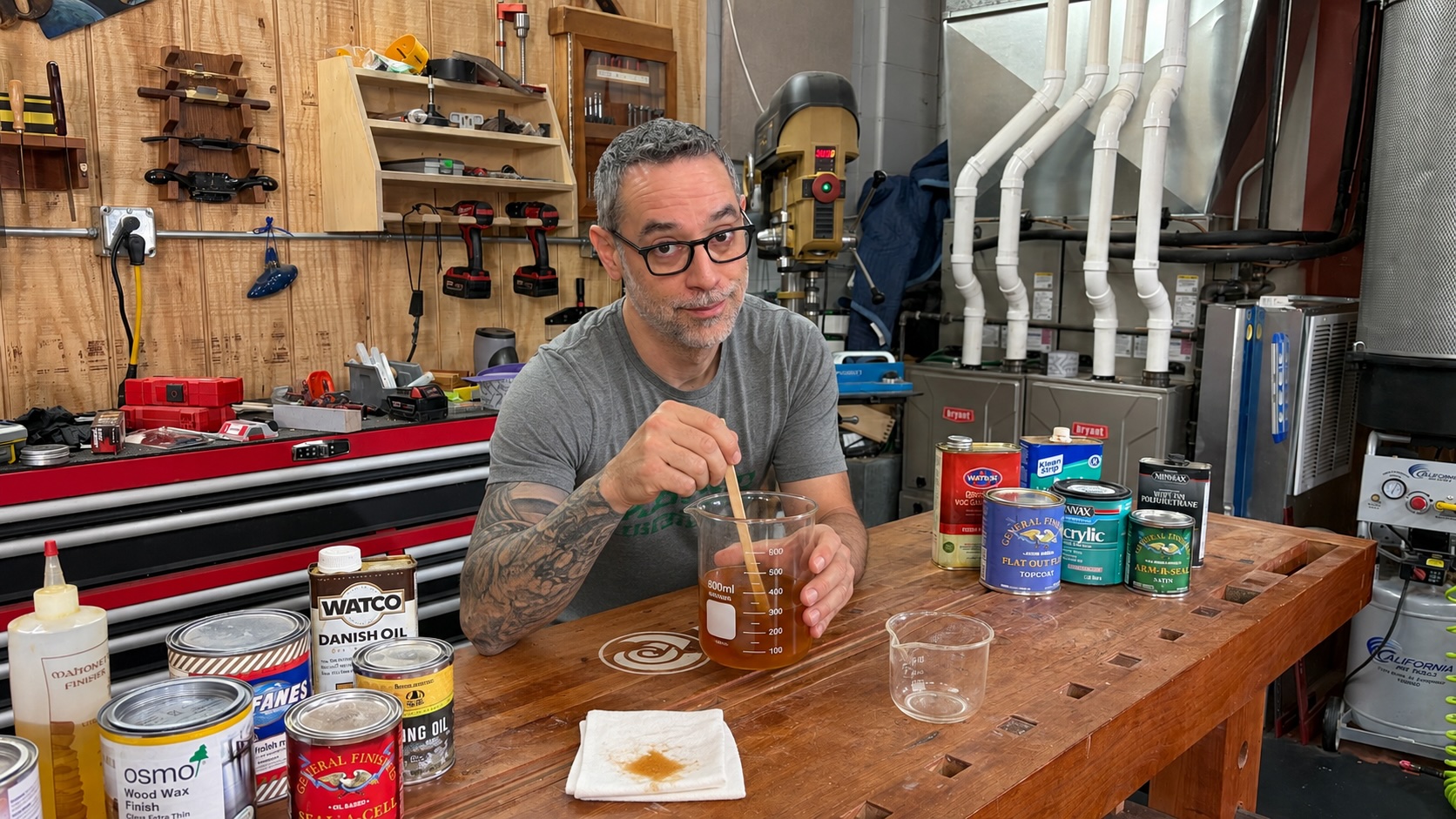
The ingredient that gives you lots of additional customization options is the varnish. You can use simple polyurethane, a higher grade polyurethane like Arm R Seal, a high quality tung oil based varnish like Waterlox, or even something with some UV inhibitors like Epifanes Marine Varnish. They will all work in this recipe. And keep in mind that many of these varnishes come in various sheens, so you can use matte, satin, semi-gloss, or gloss to get the appearance you want.
My adjusted recipe looks like this:
- 1/3 Polymerized Tung Oil
- 1/3 Varnish
- 1/3 Thinner (either mineral spirits or citrus solvent)
And keep in mind, the 1/3, 1/3, 1/3 formula is. just a starting point, not a law. Want a thinner, easier-to-wipe finish? Add more thinner. Want to build a thicker film and add additional protection, increase the varnish. Want something closer to the wood, increase the oil content.
This is where test boards become useful. Small changes in the recipe can change the look, feel, build, and drying time, so don’t make your dining table the first test.
Thin Coats Matter
Oil/varnish blends need oxygen to cure, and the oil in the mixture slows the process considerably. Apply a thin coat, let it soak in briefly, then wipe off the excess. Don’t leave a wet layer sitting on the surface and don’t follow the advice of anyone that tells you to “flood” the surface. That does nothing but invite curing issues.
I generally plan on about 24 hours between coats, and longer if the surface still feels tacky, cool, or clammy. Applying another coat before the previous one has dried can make the whole process take even longer and can even result in a finish that feels soft and gummy indefinitely.
This is exactly why I’ve moved away from flooding wood with large amounts of natural oil. In my testing, heavily saturated samples still contained uncured oil weeks, and in some cases months, later. Thin applications cured much more reliably. If you’re interested in the testing behind that, watch A Better Way to Apply Oil Finishes.
Can You Buy an Oil/Varnish Blend?
Sort of. The problem is, many finish companies use language and terms that can confuse the consumer. So buying a can of “tung oil finish” often means you’re getting a pre-thinned varnish. Plenty of companies sell oils and thinned oils, but very few of them add the varnish component. Put succinctly, I don’t actually know of any pre-made true oil/varnish blends on the market. The closest thing I can think of would be soemthing like Watco Danish Oil. While it’s not quite the same thing as a standard oil/varnish blend, it’s combination of penetrating oils and resins produce a fairly similar result though it’s less prone to building a substantial film.
What About Hardwax Oils?
Today we also have hardwax oils such as Rubio, Osmo, Natura Onecoat, and others. They fill some of the same needs: a thin, close-to-the-wood finish that’s easy to apply and repair. But they’re really in their own category. I wouldn’t treat a hardwax oil as interchangeable with a traditional oil/varnish blend.
If you want to understand how those newer finishes compare with traditional varnishes and oils, see my article Is Traditional Finishing Dead?.
Ultimately, there’s nothing wrong with the classics and a 1/3, 1/3, 1/3 mix of oil, varnish, and thinner is tough to beat. Give it a shot and let me know what you think.
Safety Note
Rags soaked in oil can spontaneously combust if not allowed to dry completely befopre throwing in the trash. So make sure any oily rags are laid out in a single layer on the floor or on a table. I often put mine outside with a rock on top to stop it from blowing away. When the rag is stiff and crusty, it goes in the trash. Better safe than sorry.
Free from Marc
Marc’s Finishing Quick Guide
The finishing mistakes Marc sees most, in one printable guide. Big, easy to read type, made to tape to the shop wall.
- Picking the right finish for the job
- Scratches that show up after the finish goes on
- Blotch control
- Real dry, recoat and cure times
- Rough final coats
- Why switching products usually isn’t the fix
Thanks! Check your inbox, the guide is on its way.
Something went wrong. Please try again.
We will email you the guide. Unsubscribe any time.

Want to watch it done? Wood Finishing in Practice
11 Guild lessons, over 7 hours: oils, hardwax oils, wiping varnish, water-based, lacquer, spraying, outdoor and workbench finishes, all on real furniture. $49.
Prefer to read? Marc’s finishing book, $10