This week’s question comes from Larry:
I just purchased an HVLP Turbine Sprayer and I’m very pleased with its performance thus far. I’ve sprayed shellac, water-based dye, and Deft brushing lacquer, all with good results. I’d like to get into spraying more lacquer because it looks great and dries fast, but all the options out there are confusing to someone new to spraying, like me. Post-catalyzed, pre-catalyzed, nitrocellulose, water-borne—what are the differences, and what should I start with? Do certain types work better in different climates? Are any brands better than others? Sherwin-Williams seems to have a wide selection, and they have stores everywhere.
Lacquer is a broad term, and unfortunately the labels don’t always make things easy. Here are the the main types you’re likely to encounter.
Nitrocellulose Lacquer
This is the classic furniture lacquer. It dries very quickly, sprays beautifully, and each new coat partially melts into the previous coat. That makes it easy to build, repair, and rub out.
The downside is that nitrocellulose lacquer tends to yellow with age and doesn’t offer the same chemical and moisture resistance as many catalyzed finishes. If you’re finishing a darker wood and want a traditional lacquer finish, that color shift may not bother you. On maple or white oak, it can be much more obvious.
CAB-Acrylic Lacquer
CAB stands for cellulose acetate butyrate. The big advantage here is color. CAB-acrylic lacquer can be nearly water-white and is much more resistant to yellowing than nitrocellulose lacquer. That makes it a great choice for light woods, whites, and pale colors.
Sherwin-Williams still makes its Sher-Wood CAB-Acrylic Lacquer, which they specifically describe as water-white and highly resistant to yellowing.
Pre-Catalyzed Lacquer
Pre-cat lacquer adds a chemical cure to the fast drying properties of lacquer. The result is better resistance to moisture, household chemicals, and general wear than you typically get from traditional nitrocellulose lacquer.
The catalyst is already incorporated before you use the finish, so you don’t have to mix a fresh batch every time you spray. There is still a working life, but depending on the product it can be measured in months. Sherwin-Williams, for example, lists a four-month pot life for its Hi-Bild Precat Lacquer. For cabinets and furniture that will see regular use, pre-cat lacquer can be a very good choice.
Post-Catalyzed Lacquer
With a post-cat product, you add the catalyst shortly before spraying. That gives you a more controlled chemical cure and can provide excellent durability, but you also have to mix accurately and pay attention to the product’s pot life.
For the average home woodworker, I wouldn’t make post-cat lacquer my first stop. It makes more sense when you already have some spray experience and a finishing setup suited to these products.
Waterborne Lacquer
Waterborne finishes have come a long way over the years. Some products are sold as waterborne lacquers because they give you the fast build, clarity, and spray characteristics we associate with lacquer, even though the chemistry is quite different from traditional nitrocellulose lacquer.
They’re especially worth considering on light-colored woods because many add very little amber color. They also avoid much of the solvent load associated with traditional lacquer. My recent testing showed water-based finishes getting closest to the pale, unfinished appearance of maple and white oak.
Temperature and Humidity Matter
Traditional solvent lacquer dries very fast, which is part of its appeal, but that also makes weather conditions important. High humidity can cause blushing, a cloudy or milky appearance caused by moisture becoming trapped as the solvents evaporate. Temperature also affects flow and dry time. Retarders can help under some conditions, but use the recommendations for the specific lacquer you’re spraying rather than relying on one universal recipe.
So Which Lacquer Should You Use?
For a traditional, easy-to-repair lacquer finish, start with nitrocellulose. For light woods where yellowing is a concern, look at CAB-acrylic or a good waterborne finish. For cabinetry and furniture that need more resistance to everyday use, pre-catalyzed lacquer is worth considering. I’d leave post-catalyzed finishes until you have more spray experience and a reason to need the added performance.
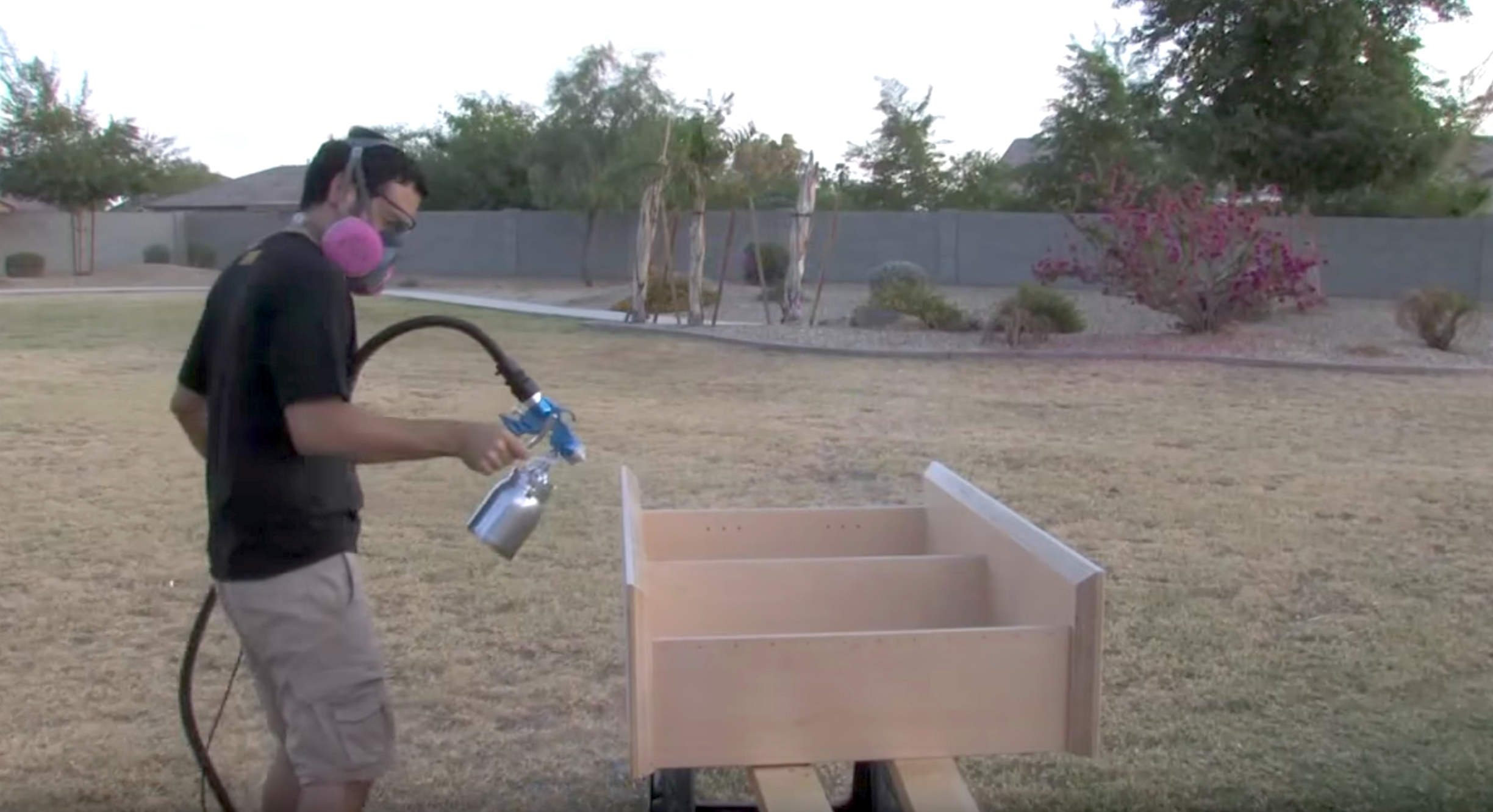
Whatever you choose, an HVLP Turbine Sprayer (such as this one from Fuji) is well suited to this kind of work. Spraying takes practice, so start with scrap and learn how your finish behaves with your gun, needle size, fluid setting, and shop conditions. Practicing with the equipment is one of the best ways to improve your results.
One final point: solvent-based lacquer is flammable and produces hazardous vapors and overspray. Use a suitable spray area, proper ventilation, appropriate respiratory protection, and keep ignition sources away from the spraying area.
Related Content: